Fossil hunting
Good to know
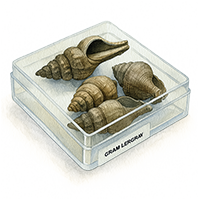
Collecting fossils
Collecting fossils is like a treasure hunt. Instead of gold, you're searching for ancient remains of plants and animals that lived thousands, sometimes even millions of years ago. Europe offers countless fantastic locations where you can find fossils, such as beaches, rocky cliffs, and quarries. With the right equipment and a bit of knowledge, you can enjoy a safe and exciting day outdoors. On this site, you'll discover the places we've visited in our free time.
Preparation
Before you go on a fossil hunt, it's smart to be well prepared. You can find fossils in all kinds of places: on the beach, in a field, near a cliff, or simply among the stones. If you know what to bring and what to look out for, it will be an exciting and fun day.
A small backpack is useful for carrying your things. Depending on where you're searching, you might need different tools. If you're going to a place with hard rocks, a hammer and chisel are suitable. For layered stones like slate, it's better to use a blunt putty knife or palette knife to carefully separate the layers. In soft limestone or clay, a screwdriver works well to loosen small pieces.
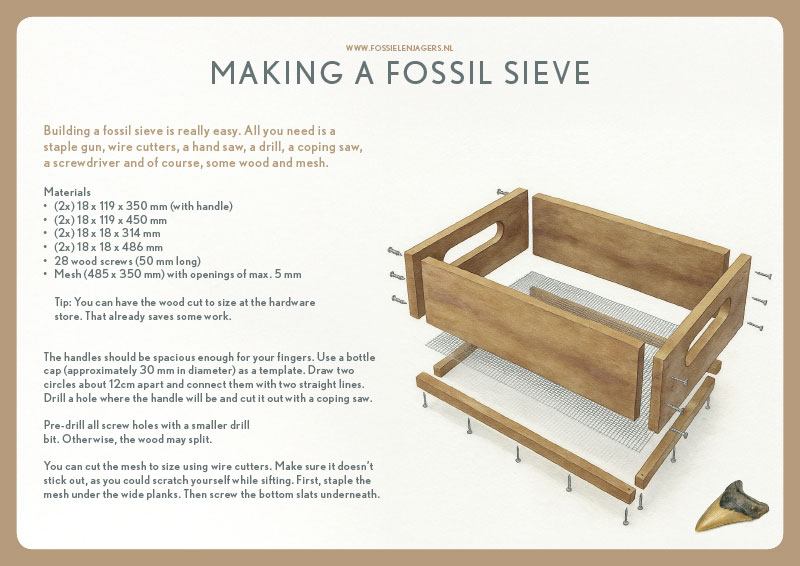
Sometimes you don't need any tools at all. On the beach or between loose stones, fossils can be lying out in the open. A brush is handy for sweeping sand and mud off your finds. In places with lots of sand or mud, a fossil sieve can be very useful. It helps you sift out small pieces like teeth, bones, or shells.
To keep your finds safe, it's smart to bring small boxes. Tissues are useful for cleaning your hands or wrapping delicate fossils. In a notebook, you can write down what you found and where. A magnifying glass helps you see small fossils and special details more clearly.
If you find something special, take a photo before picking it up. That way, you'll remember exactly where it was and what it looked like. This is helpful if you want to learn more about it or show it to a museum or scientist.
On this page, you can download a fossil hunting chart. It's a handy chart that helps you figure out what kind of fossil you've found. It shows pictures and names of different fossils, like shells, teeth, or bones. You can also find a step-by-step guide to make your own fossil sieve. With that sieve, you can collect tiny fossils from sand or mud.
Safety
When you go fossil hunting, it's important to think carefully about your safety. Wearing safety goggles and gloves helps protect your eyes and hands. Sturdy boots make it easier to walk safely, even on slippery or uneven ground.
Always bring a first aid kit for small injuries. Remember to drink enough water and take some food with you for extra energy. Apply sunscreen and pack a raincoat in case the weather changes.
It is best to go with an adult or in a group. Always let someone know where you are going.
Fossil hunting is exciting and fun, but you need to be careful. Cliffs can be dangerous because rocks might fall and sometimes parts of the cliff can collapse. If you are searching on the beach, pay close attention to the tides so you don't get trapped. Always check the weather forecast and tide table before you leave.
Use your tools with care. They are helpful but often sharp. If you see a fossil sticking out of a rock, don't start hammering right away. Ask an adult for help and take your time, because fossils are often very fragile and can break easily.
Rules and regulations
Every country has its own rules for collecting fossils. Sometimes you are allowed to take small fossils home, like a shell or a tiny tooth. But in other places, you need permission or even a special permit. In national parks and nature reserves, collecting is often forbidden or only allowed under certain conditions. So always look up the rules first, or ask the people who manage the area.
If you are on private land, it is important to ask the owner first if you are allowed to search there. That is respectful and part of being a responsible fossil hunter.
And imagine you find something truly special, like a piece of dinosaur bone or a rare shell that no one has seen before. Tell a museum or a scientist about it. In Denmark you even have to: very special finds are called danekræ there, and you must show them to a museum. Sometimes you even get a reward! They might want to study it, and you could help with real scientific research. That would be an adventure to be proud of.
Good to know
Fossils tell the story of our Earth, from millions of years ago to now. Before you start searching yourself, it's smart to learn the basics first. What exactly are fossils? Which periods do they come from? And how can you find them yourself? Click the pictures below to find out, step by step.
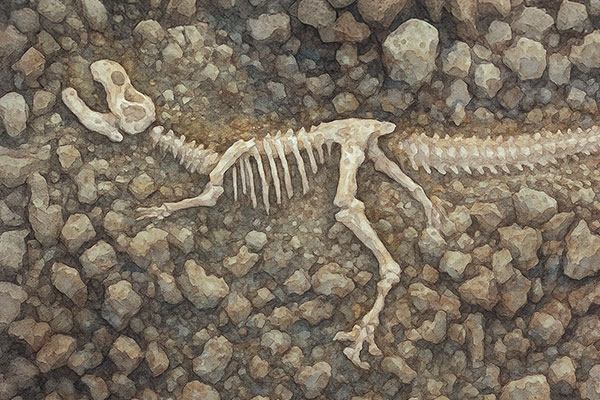
What are fossils?
Want to know what fossils are? Read here how they form and what they tell us about animals from the past. Discover the world of ancient bones and shells!

Geological periods
Earth is super old and has been through lots of different periods. On this page you'll discover how old the Earth is and which plants and animals lived back then.
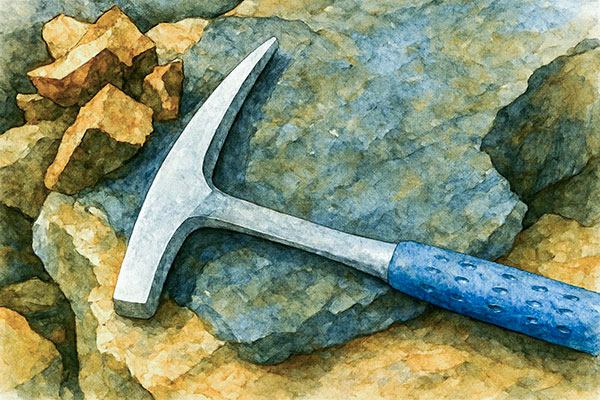
Fossil hunting
Want to hunt for fossils too? Here you can see what I bring along. What you need depends on where you're going to search!
